
What is an Appraisal?
A home purchase is the largest, single investment most people will ever make in their lifetime. Be it, a primary residence, a vacation home or an investment, the purchase of real property is a multifaceted financial transaction that requires multiple parties to pull it all off.
The people involved are very familiar, for the most part. The Realtor is the most common face of the transaction. The mortgage company provides the financial capital necessary to fund the transaction. The title company ensures that all aspects of the transaction are complete and that a clear title passes from the seller to the buyer.
So who makes sure the value of the property is in line with the amount being paid? There are too many people exposed in the real estate process to let such a transaction proceed without making certain that the value of the property is matching with the amount being paid.
This is where the appraisal comes in. An appraisal is an unbiased estimate of what a buyer might expect to pay, or a seller receive for a parcel of real estate, where both buyer and seller are informed parties. To be an informed party, most people turn to a licensed, certified, professional appraiser to provide them with the most exact estimate of the true value of their property.
The Inspection
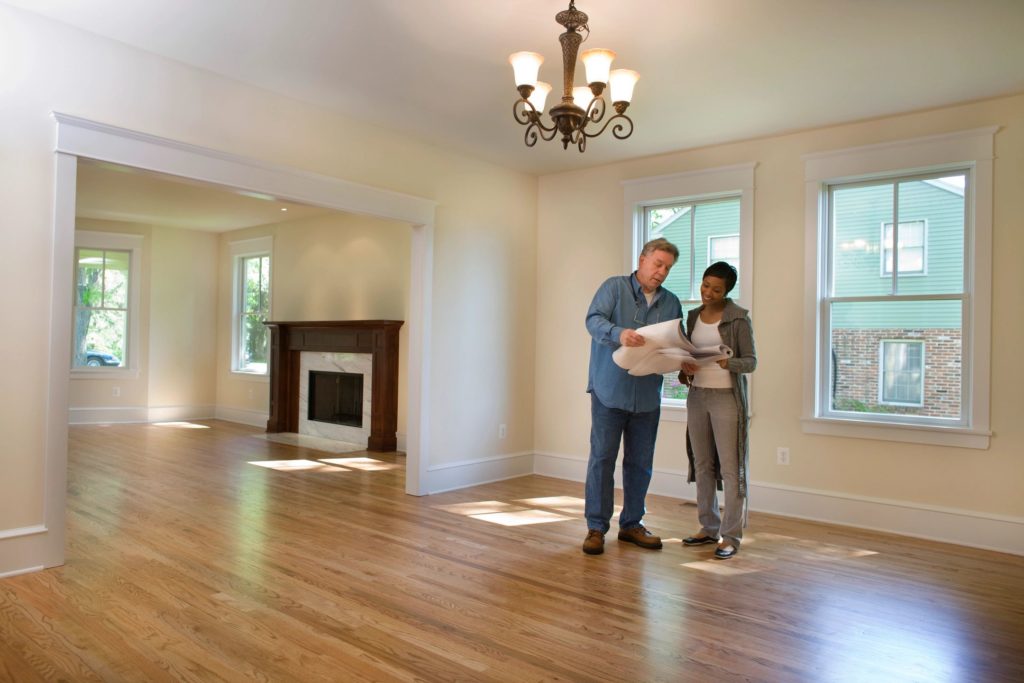
The real estate appraisal starts with the inspection. An appraiser’s job is to inspect the property being appraised to ascertain the true status of that property. He or she must actually see features, such as the number of bedrooms, bathrooms, the location, and so on, to ensure that they really exist and are in the condition a reasonable buyer would expect them to be. The inspection often includes a sketch of the property, ensuring the proper square footage and conveying the layout of the property. Most importantly, the appraiser looks for any noticeable features, or defects that would affect the worth of the house.
Once the site has been inspected, an appraiser uses two or three approaches to determining the value of real property: a cost approach, a sales comparison and, and for rental property, an income approach.
Cost Approach
The cost approach is the easiest to understand. The appraiser uses information on local building costs, labor rates and other factors to determine how much it would cost to construct a property similar to the one being appraised. This value often sets the upper limit on what a property would sell for. Why would you pay more for an existing property if you could spend less and build a brand new home instead? While there may be mitigating factors, such as location and amenities, these are usually not reflected in the cost approach.
Sales Comparison
As an alternative, appraisers rely on the sales comparison approach to value these types of items. Appraisers get to know the neighborhoods in which they work. They understand the value of certain features to the residents of that area. They know the traffic patterns, the school zones, the busy thoroughfares; and they use this information to establish which attributes of a property will make a difference in the value. Then, the appraiser researches recent sales in the vicinity and finds properties that are ”comparable” to the subject being appraised. The sales prices of these properties are used as a basis to begin the sales comparison approach.
Using knowledge of the value of certain items such as square footage, extra bathrooms, hardwood floors, fireplaces or view lots, etc., the appraiser adjusts the comparable properties to more accurately portray the subject property. For example, if the comparable property has a fireplace and the subject does not, the appraiser may deduct the value of a fireplace from the sales price of the comparable home. If the subject property has an extra bathroom and the comparable does not, the appraiser might add a certain amount to the comparable property.
In the case of income producing properties – rental houses for example – the appraiser may use a third approach to valuing the property. In this case, the amount of income the property produces is used to arrive at the current value of those monies over the foreseeable future.
Reconciliation
Combining information from all approaches, the appraiser is then ready to specify an estimated market value for the subject property. It is important to note that while this amount is probably the best indication of what a property is worth, it may not be the final sales price. There are always extenuating factors such as seller motivation, urgency or ”bidding wars” that may adjust the final price up or down. But the appraised value is often used as a guideline for lenders who don’t want to loan a buyer more money than the property is actually worth. The bottom line is: an appraiser will help you get the most accurate property value, so you can make the most informed real estate decisions.
Appraiser Jargon
Here are some examples of common appraiser jargon and their meanings:
Adjustment
When comparable properties have been identified, the appraiser makes adjustments to the Sales Price of each of the comparables to bring them into equivalency with the subject property, accounting for differences in location, construction quality, living area, acreage, frontage, amenities and the like. This is where the professional expertise of an appraiser is most valuable.
Chattel
Personal property that may be on the subject property, but does not figure into the considered opinion of value in the appraisal report.
Comparable or “comp”
Properties like the subject property nearby which have sold recently, used as a source to determine the fair market value of the subject property.
Drive-by
An appraisal that is limited to an exterior-only examination of the Subject to make a determination that the property is actually there and has no noticeable defects or damage visible from the outside. Fannie Mae’s form for this type of appraisal is its 2055, so you may hear a drive-by referred to as a “2055.”
Fair market value
The appraiser’s opinion of value as written in his or her appraisal report should reflect the fair market value of the property — what a willing buyer would pay a willing seller in an arm’s-length transaction.
GLA
“Gross Living Area,” the sum of all above grade floor space, including stairways and closet space. GLA is often determined using exterior wall measurements.
Latent defects
A defect on the property that is not readily apparent but which impact the fair market value. Structural damage or termite infestation might be examples.
MLS
A Multiple Listing Service is a proprietary listing of all properties on the market in a given area and their listing prices, as well as a record of all recent closed sales and their sales prices. Created by and used primary by real estate agents, many appraisers pay for access to these databases to assist in comparable selection and adjustment research.
Obsolescence
The value of assets diminishes as their capabilities degrade or more desirable options are developed. Functional obsolescence is the presence or absence of a feature that renders the property undesirable. Obsolescence can also occur because the surrounding area changes, making a feature of the property less desirable.
Subject
Short for the property being appraised.
Useful life
The time during which a property can provide benefits to its owner.
URAR
Short for Uniform Residential Appraisal Report, Fannie Mae form 1004, it is the form most lenders require if they need a full appraisal (with walk-through inspection).
USPAP
Short for Uniform Standards of Professional Appraisal Practice, USPAP promotes standards and professionalism in appraisal practice, and is often enacted into law in a state.
Walk-through
This is an inspection that includes a visit to each part of the interior of the house. It is used in estimating value.